On October 29, Alphabet shares fell 12.6%, the stock’s worst day since its 2004 IPO. Close to half a trillion dollars in market value disappeared in a single session. Within days, a story had formed around the drop: Google is cannibalizing itself. It is steering people toward AI answers that carry fewer ads, while spending record sums to build the AI that produces those answers.
It is a tidy narrative. Part of it holds up and part of it does not. For any business that depends on Google for calls and leads, the difference matters.
What the numbers showed
By most measures, Alphabet’s third quarter was strong. Revenue rose 25% to $127.6 billion. Google Cloud more than doubled to $30.7 billion, with $11.1 billion in operating income. Sundar Pichai said the company is now on a half-trillion dollar revenue run rate.
The problem was Search. Search and other revenue grew 12% to $63.4 billion, down from 17% in the second quarter and short of the roughly $65 billion analysts expected. Paid clicks grew 8%, down from 13%. For the first time in the company’s modern history, Search made up less than half of total revenue.
Then came the spending. Capital expenditures reached $51.4 billion in the quarter, more than double the year before. Full-year guidance held at $195 billion to $205 billion, and CFO Anat Ashkenazi said capex will “increase significantly in 2027.” Free cash flow for the quarter was negative $9.1 billion. Earnings per share of $2.12 also missed, although a loss on equity holdings accounted for $0.55 of that.
The case for cannibalization
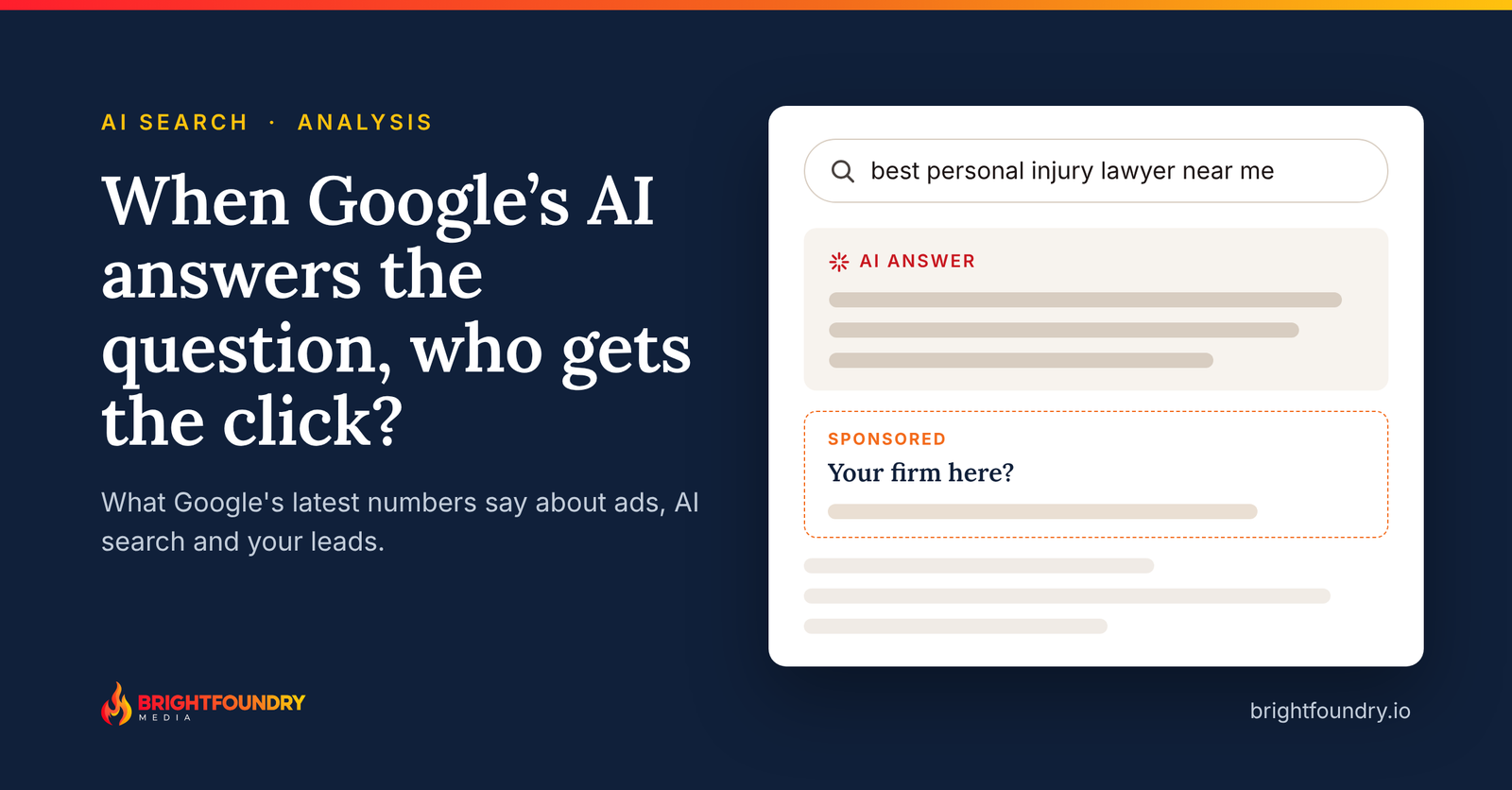
The bear argument is simple. A traditional results page is an ad machine: a list of links, several sponsored placements and a user who clicks. An AI answer resolves the question on the page. Fewer clicks mean fewer chances to charge an advertiser.
Google gave the bears something to work with. On the earnings call, chief business officer Philipp Schindler acknowledged that AI Mode currently monetizes at a lower rate than traditional Search, and management listed it among the reasons Search slowed. Pivotal Research CEO Jeffrey Wlodarczak summed up the mood: “The bears will argue this is the first quarter that AI is starting to seriously hurt their search business.”
Bank of America put a number on that fear. Its analysts now value Google’s core search business at about 10 times earnings, below the energy sector, the cheapest part of the market at 13 times. In other words, the market is pricing Search like a business in managed decline.
What the narrative gets wrong
The idea that Google is not serving ads in AI results is out of date. On the same call, Schindler said Google is “scaling high-quality ads within AI Overviews and AI Mode to more users and queries,” including “taking our monetization footprint global for the first time.” Multi-turn ads, which can appear on follow-up questions inside an AI Mode conversation, are rolling out in the U.S.
Usage is not the issue either. Pichai said query growth was the highest in five years. AI Overviews reaches about 2.5 billion monthly users and AI Mode about 1 billion. Google also says most AI Mode queries are incremental, meaning searches that would not have happened before.
Some of the slowdown had ordinary causes. Management named currency as the largest sequential drag, along with the EU ending its de minimis customs exemption, which hit cross-border retail advertisers. Back in July, Ashkenazi warned that Search would start lapping a strong prior-year acceleration in the third quarter.
The fairer reading is that Google is accepting lower revenue per query today for a format it expects to monetize better later. Analyst Eric Seufert compares it to Meta’s Reels, which diluted revenue at first and reached rough parity once ad targeting caught up. That outcome is plausible, but nobody can promise it.
The bigger risk is the spending
The harder question is cash. Capex consumed about 40% of revenue in the quarter, up from 23% a year earlier. Depreciation rose 49%, and it will keep climbing as new data centers come online. Interest expense rose to about $1 billion as Alphabet took on debt.
That changes what kind of company investors own. Google Search was one of the most profitable businesses ever built, and it needed relatively little capital. Alphabet now looks more like an infrastructure company, betting that Cloud demand and AI products will repay a buildout of roughly $200 billion this year and more in 2027. Cloud’s 103% growth is the best evidence that the bet can work. For now, the stock price says investors want to see the returns first.
What this means for businesses that rely on Google
For law firms, medical practices and local service businesses, the takeaways are practical.
First, Google has every reason to put more ads inside AI answers. Expect new formats, more automation through products like AI Max and less manual control. Advertisers who test early will learn what converts before competition drives Google Ads costs up.
Second, fewer organic clicks per search is the new baseline. Being cited in an AI answer now matters as much as ranking in the traditional results. That takes clear, specific content, consistent business information and strong reviews, the core of modern SEO.
Third, measure what pays the bills. Paid clicks grew 8% last quarter while cost per click rose 4%. If you only watch clicks and traffic, you will miss the shift. Track calls, booked appointments and signed clients by source.
Google is changing how it makes money. The businesses that adjust with it will keep getting found.
Sources
- Alphabet Q3 2026 earnings release
- Fortune: Alphabet just had its worst day as a public company
- Mobile Dev Memo: AI Mode’s monetization penalty
- PrimeXBT: Alphabet shares fall after Q3 miss
- sec-api: Alphabet Q3 2026 10-Q analysis
- Vested Finance: AI boom meets a cash crunch
- Digital Applied: Alphabet Q2 2026 earnings